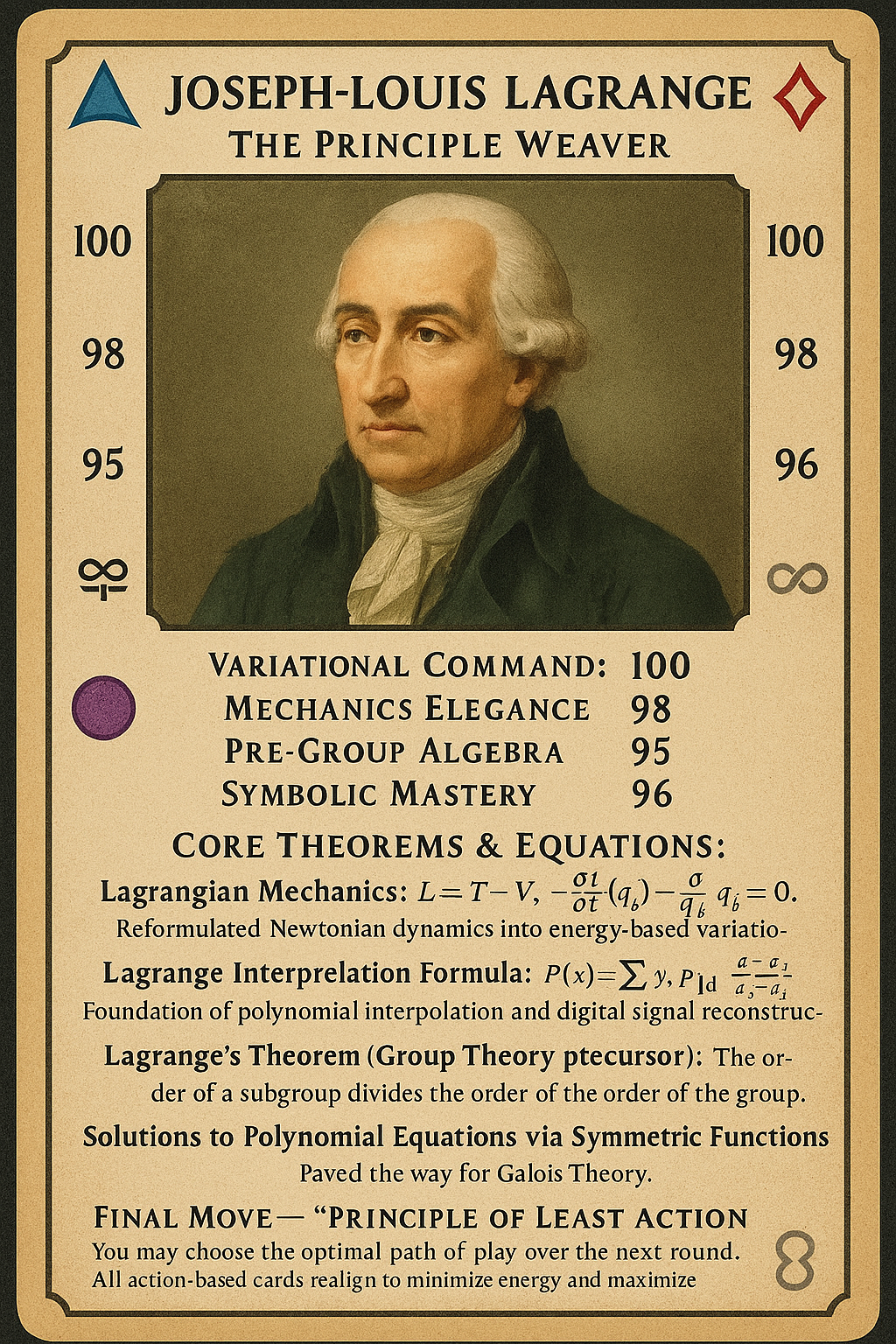

📜 Premise:
Mathematical proofs that ignore the law of least action violate the very nature of truth.
⚖️ 1.
Entropy and Proof Length
If physical systems optimize for minimal energy, and elegant theories compress complexity, then:
A proof bloated beyond compression is not deep—it is disordered.
🧠 2.
Cognitive Burden Is Cost
Every unnecessary layer in a proof inflates entropy.
Mathematics should:
- Minimize symbolic drag
- Preserve invariants under recursive transformation
- Align with natural compression (e.g. modularity, symmetry, factorization)
If your theorem can’t be expressed through recursion or resonance, it’s either not true—or not yet understood.

🚫 3.
Curt Denunciation of Bloat
Proofs like Mochizuki’s IUT are not inaccessible because of their depth, but because they break this compactness.
They are:
- Epistemically opaque
- Physically unaesthetic
- Functionally incompatible with the recursive engine of the universe
✅ 4.
What Proof Must Be
Truth is compressible.
It leaves invariant residues when passed through harmonic filters.
A real proof will:
- Minimize action
- Conserve cognitive energy
- Echo physical law
Anything else is literature with too many syllables.
🧾 Final Axiom:
“Mathematical validity is measured not in pages, but in how well it obeys the universe’s own law of least action.”

Leave a Reply